
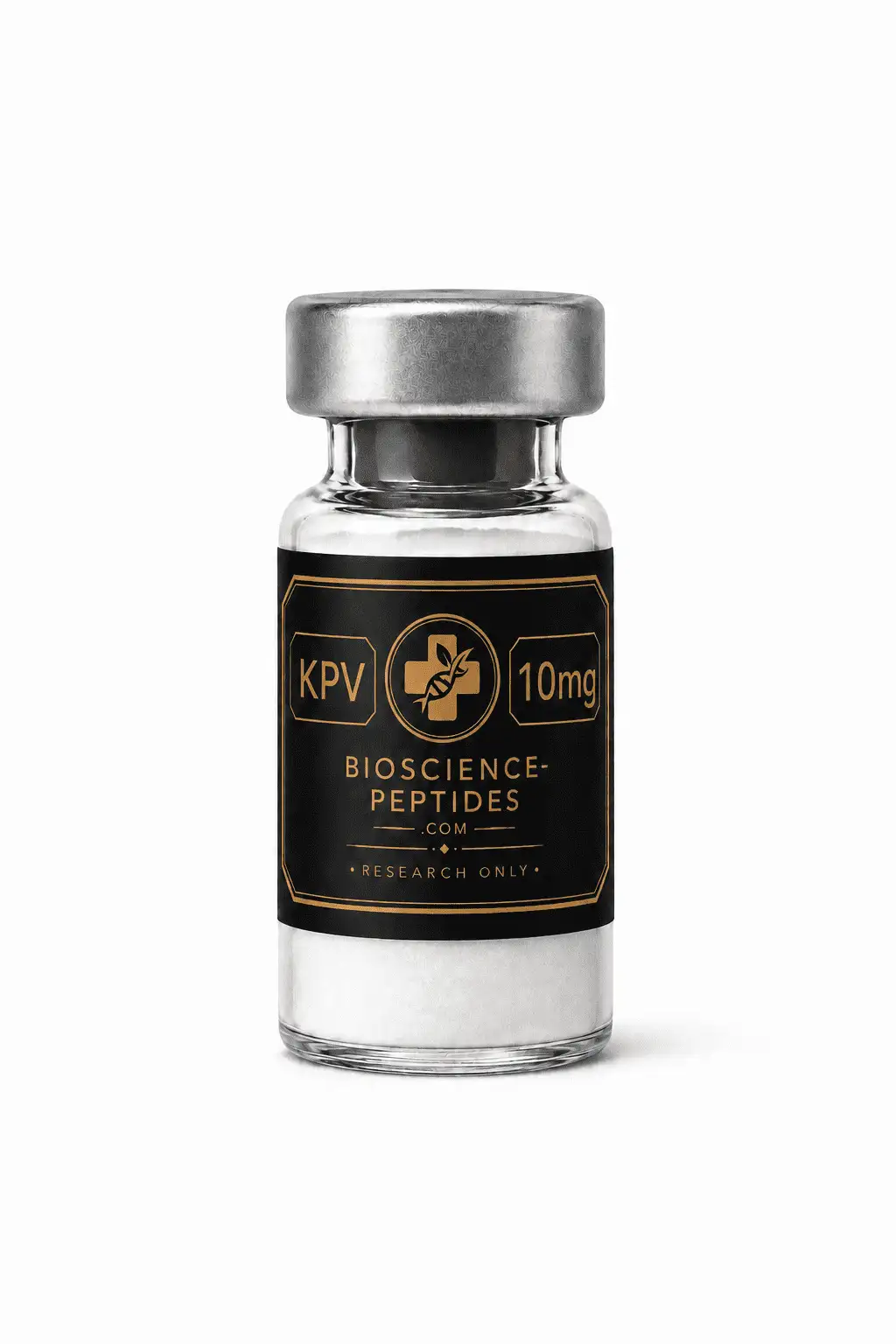
KPV (10MG)
$45.00
KPV (10 mg) is a synthetic tripeptide composed of lysine, proline, and valine. It is a peptide fragment associated with alpha-melanocyte-stimulating hormone (α-MSH) and is studied for its interactions with inflammatory signaling pathways, immune responses, and intestinal biology. KPV is an important subject in experimental peptide research, particularly investigations into cellular signaling and inflammation-related mechanisms. This product is intended strictly for laboratory research and educational purposes, not human or veterinary consumption.
KPV (10 mg): Peptide Research and Scientific Overview
What Is KPV Peptide?
KPV is a naturally inspired synthetic tripeptide made up of three amino acids: lysine (K), proline (P), and valine (V). It represents the C-terminal amino acid sequence of alpha-melanocyte-stimulating hormone (α-MSH), a peptide involved in several biological signaling processes.
KPV has attracted scientific interest because researchers have investigated its relationship with inflammatory pathways, immune system activity, and intestinal cellular function. Its relatively short amino acid sequence makes it a useful subject for studying peptide interactions and biological signaling mechanisms.
The KPV (10 mg) product is identified by its stated quantity and compound name. Researchers should consult the manufacturer’s documentation for verified identity, purity, batch information, and analytical specifications.
Understanding the Structure of KPV
KPV consists of three amino acids:
- Lysine (K): A basic amino acid involved in protein structure and numerous cellular processes.
- Proline (P): An amino acid with a distinctive structure that influences peptide conformation.
- Valine (V): A branched-chain amino acid that contributes to protein structure and biological function.
Together, these amino acids form a short peptide sequence that researchers can investigate in controlled laboratory environments.
KPV’s relationship to α-MSH is particularly relevant because α-MSH belongs to the melanocortin family of peptides, which participate in several physiological signaling pathways.
KPV and Inflammatory Signaling Research
One major area of scientific interest surrounding KPV involves inflammation-related signaling. Inflammation is a complex biological response that helps the body respond to injury, infection, and other forms of cellular stress.
Researchers have investigated KPV in experimental models involving inflammatory mediators and cellular signaling pathways. Preclinical studies have explored whether this peptide influences the activity of certain inflammation-associated processes.
These investigations are useful for understanding how short peptides interact with biological systems. However, laboratory observations do not establish that KPV is an effective treatment for inflammatory conditions in humans.
KPV and Intestinal Research
Another important research area involves intestinal biology. The gastrointestinal tract contains specialized cells, immune components, and signaling networks that contribute to normal intestinal function.
Scientists have explored KPV in experimental studies involving intestinal inflammation and epithelial cell responses. These investigations help researchers examine how peptide signaling may relate to intestinal cellular environments.
Research involving KPV has included laboratory and animal models. Findings from these models should not be treated as proof of human clinical effectiveness, and further controlled research is necessary to understand its potential applications.
KPV and Immune System Investigations
The immune system relies on communication between different cells and signaling molecules. These interactions help coordinate responses to environmental challenges and maintain biological balance.
Because KPV has been studied in inflammation-related models, it is also of interest in research examining communication between immune cells and other tissues.
Researchers may investigate its relationship with cytokine signaling, cellular responses, and other mechanisms associated with immune regulation. These remain areas of scientific investigation rather than established therapeutic outcomes.
Why Is KPV Relevant to Peptide Research?
KPV offers researchers a relatively simple peptide structure for examining specific biological interactions. Its connection to α-MSH and its investigation in inflammatory models make it relevant to several research areas.
Common areas of investigation include:
- Peptide structure and amino acid interactions.
- Inflammation-associated cellular signaling.
- Intestinal epithelial biology.
- Immune response mechanisms.
- Cytokine-related research pathways.
- Experimental studies involving α-MSH-derived peptides.
These research topics help expand scientific understanding of short bioactive peptides and their interactions with biological systems.
KPV (10 mg) Product Information
KPV (10 mg) is presented as a research-oriented peptide product. The 10 mg designation refers to the stated product quantity, not a recommended dosage or clinical-use instruction.
Before laboratory evaluation, qualified researchers should review available product specifications, including identity confirmation, purity information, batch documentation, and appropriate handling requirements. Product quality should be assessed using reliable analytical documentation rather than marketing descriptions alone.
Research Use Disclaimer
KPV (10 mg) is intended strictly for laboratory research and educational purposes. It is not intended for human or veterinary consumption, injection, self-experimentation, diagnosis, prevention, or treatment of any disease or medical condition. Research findings should not be interpreted as evidence of established clinical safety or effectiveness.
Conclusion
KPV is a synthetic tripeptide composed of lysine, proline, and valine. Its relationship to alpha-MSH and its investigation in inflammation-related, intestinal, and immune signaling models have made it an interesting subject in peptide research. The KPV (10 mg) listing provides a product reference for laboratory investigations, while verified specifications and responsible research practices remain essential considerations.
Be the first to review “KPV (10MG)”
Related products
FEATURE PEPTIDES
FEATURE PEPTIDES
FEATURE PEPTIDES
FEATURE PEPTIDES
FEATURE PEPTIDES

FEATURE PEPTIDES
FEATURE PEPTIDES
FEATURE PEPTIDES
Reviews
There are no reviews yet.