
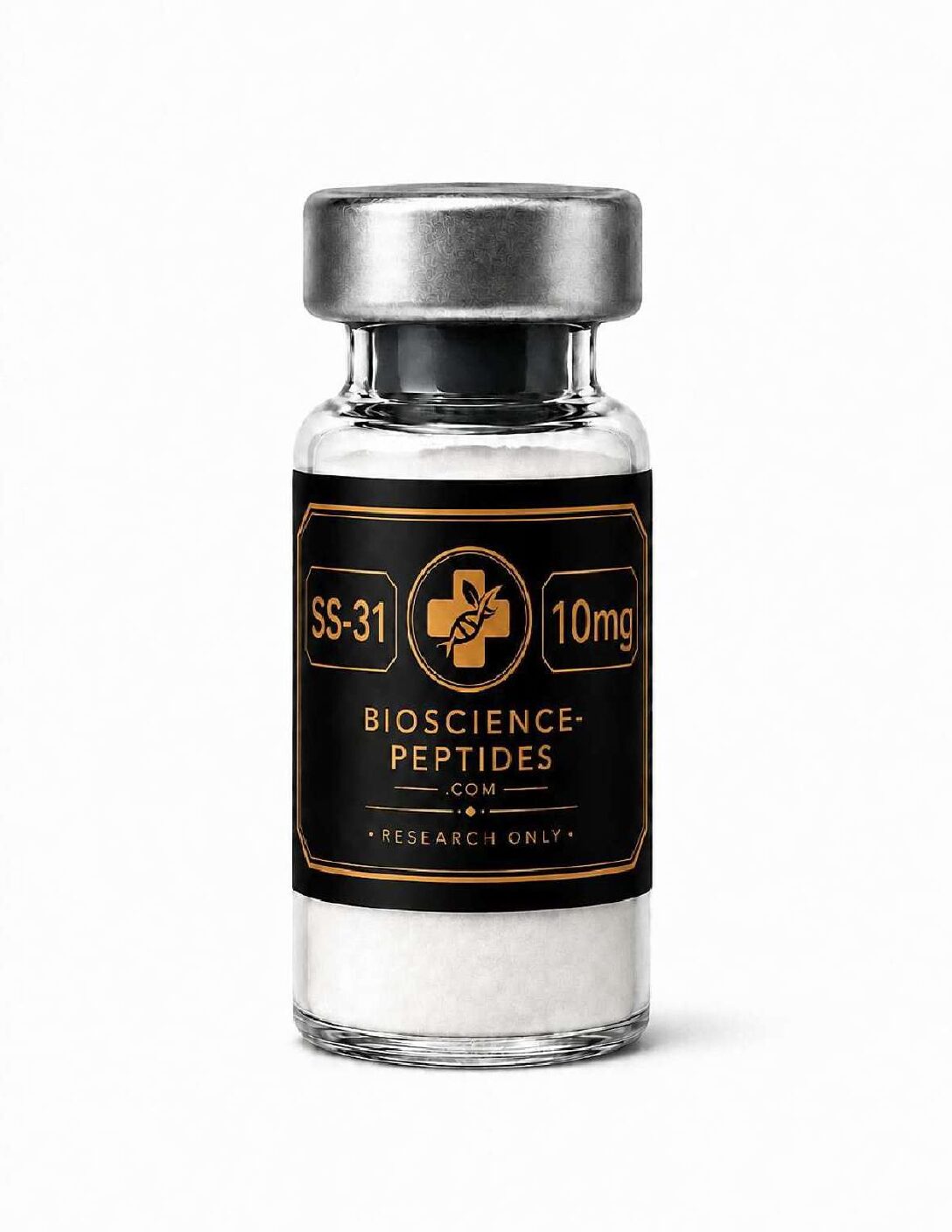
SS-31 (10)
$59.00
SS-31 (10 mg) is a synthetic mitochondria-targeting tetrapeptide, also known as elamipretide or MTP-131. It is studied for its interaction with cardiolipin in the inner mitochondrial membrane and its potential role in mitochondrial structure, cellular energy research, and oxidative-stress pathways. This 10 mg research product is intended for laboratory and educational research use only, not for human or veterinary consumption.
SS-31 (10 mg): Elamipretide and Mitochondrial Research
What Is SS-31?
SS-31, also known as elamipretide, MTP-131, or Bendavia, is a synthetic mitochondria-targeting tetrapeptide studied for its interaction with cardiolipin, an important phospholipid found in the inner mitochondrial membrane. Researchers have investigated this compound because of the central role mitochondria play in cellular energy production, metabolism, and normal cell function.
The SS-31 (10 mg) product is presented as a research compound for laboratory and educational investigation. Its stated quantity is 10 mg; researchers should consult the supplier’s documentation for exact composition, purity, storage requirements, and analytical specifications.
Understanding Mitochondria and Cellular Energy
Mitochondria are specialized structures inside cells that help convert nutrients into usable energy. They are commonly described as the cell’s energy-producing centers because they contribute to the production of adenosine triphosphate (ATP).
Mitochondrial activity involves several coordinated processes, including the electron transport chain and oxidative phosphorylation. These processes depend on the organization and function of mitochondrial membranes. Because changes in mitochondrial performance can affect many cellular pathways, mitochondrial biology remains an important area of scientific research.
SS-31 has attracted research interest because it is designed to interact with components of the inner mitochondrial membrane rather than acting simply as a general nutritional ingredient.
How Does SS-31 Interact With Cardiolipin?
Cardiolipin is a specialized phospholipid concentrated in the inner mitochondrial membrane. It helps maintain membrane structure and supports the organization of proteins involved in energy production.
Scientific investigations have examined how SS-31 associates with cardiolipin and how this interaction may influence mitochondrial membrane organization. Researchers have explored whether this relationship can help maintain mitochondrial structure and support normal cellular bioenergetic processes under experimental conditions.
These mechanisms are important subjects of investigation, but laboratory findings should not automatically be interpreted as proof of clinical benefits in humans. More research is needed to understand the full range of biological effects and potential applications.
SS-31 and Oxidative Stress Research
Oxidative stress occurs when the production of reactive oxygen species exceeds the body’s ability to regulate or neutralize them. Mitochondria are involved in several pathways associated with reactive oxygen species, making them a frequent focus of oxidative-stress research.
SS-31 has been studied in experimental models examining mitochondrial function, membrane stability, and oxidative processes. Scientists continue to investigate how its interaction with cardiolipin may influence these pathways.
The findings contribute to broader research into mitochondrial biology. However, they do not establish SS-31 as a proven antioxidant treatment, anti-aging product, or therapy for general health conditions.
What Makes SS-31 Relevant to Scientific Research?
SS-31 is of interest because it provides researchers with a specific compound for studying mitochondrial membrane interactions. Its research applications include investigations involving:
- Cardiolipin and mitochondrial membrane structure.
- Cellular bioenergetics and ATP-related pathways.
- Mitochondrial morphology and function.
- Oxidative-stress mechanisms.
- Cellular responses in experimental disease models.
These are research areas rather than guaranteed product outcomes. Results may vary according to the experimental model, study design, and laboratory conditions.
SS-31 and Elamipretide: Important Distinctions
Elamipretide is the name used for SS-31 in clinical development. In September 2025, the United States Food and Drug Administration approved a prescription formulation called Forzinity for improving muscle strength in certain adults and children with Barth syndrome who weigh at least 30 kg. The approval was granted under the accelerated approval pathway.
This prescription approval applies to the specific regulated formulation and indication. It does not mean that every product marketed as SS-31, including a 10 mg research product, is FDA-approved, interchangeable with Forzinity, or suitable for human use. <Link url=”https://www.fda.gov/drugs/drug-trials-snapshots/drug-trials-snapshots-forzinity” title=”Read the FDA’s Forzinity approval information”/>.
SS-31 (10 mg) Product Information
SS-31 (10 mg) is identified by its compound name and stated quantity. Before laboratory use, qualified researchers should review the product documentation, including identity testing, purity information, batch details, and handling instructions supplied by the manufacturer.
The listed 10 mg quantity should not be interpreted as a recommended dose or personal-use instruction. Product specifications should always be verified against the actual supplier documentation.
Research Use Disclaimer
SS-31 (10 mg) is presented for laboratory research and educational purposes only. It is not intended for human or veterinary consumption, injection, self-experimentation, diagnosis, prevention, or treatment of any disease. This product description does not constitute medical advice or establish clinical efficacy or safety.
Conclusion
SS-31 (elamipretide) is a scientifically interesting mitochondria-targeting peptide because of its interaction with cardiolipin and its potential relevance to research into mitochondrial structure and cellular energy processes. The SS-31 (10 mg) listing provides a reference point for laboratory research involving this compound. Researchers should rely on verified product specifications and current scientific literature when evaluating its properties and experimental applications.
Be the first to review “SS-31 (10)”
Related products

FEATURE PEPTIDES
FEATURE PEPTIDES

FEATURE PEPTIDES

FEATURE PEPTIDES

FEATURE PEPTIDES
FEATURE PEPTIDES
FEATURE PEPTIDES
FEATURE PEPTIDES
Reviews
There are no reviews yet.